Does Coconut Oil Work for Weight Loss?
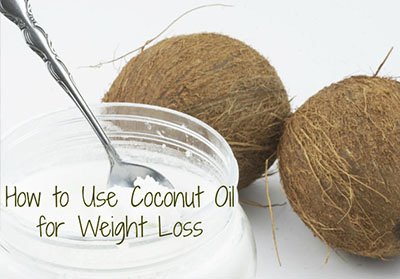 Weight loss is hard. As our lifestyles have become more sedentary and our diets have become filled with cheaper, more sugary, more fat-filled foods, more and more people in the West have begun seeking weight-loss solutions. However, with all the synthetic, artificial products out there meant to help people lose weight - including pre-made microwave meals, meal replacement shakes, and bogus "diet pills" - people have been turning to more natural solutions for weight loss. Generally, that means changes or replacements in the diet that can be phased in and have an effect on weight loss.
One natural product that's been talked up recently is coconut oil. Does it really have any weight-loss benefits? Read on, and see what we found out.
Coconut Oil: The Facts
This natural oil is derived from white coconut meat, which is pressed and bottled for selling and consuming. It's used as a product in moisturizers, hair products, and soaps, but it's most commonly used as a cooking oil.Coconut oil contains about 117 calories per tablespoon. That's slightly less than olive oil (~120 calories/tbsp) and more than butter (~102 calories/tbsp). It has another distinguishing difference: about 84% of its calories come from saturated fat. That's why it's solid at room temperature, and has a higher melting point.
For comparison, saturated fat only makes up 14% of olive oil's calories. So we know two things: it has more calories than butter, and it's composed almost entirely of saturated fats - i.e. the "bad" fats that can lead to diabetes, hypertension, and cardiovascular disease. Why, then is coconut oil being promoted as a way to help people lose weight?
Coconut Oil and Weight Loss
Some claim that the answer to coconut oil's weight-loss capabilities lies in its fatty acids. Fatty acids are found in many types of foods, and are a key component in both proteins and fats. While foods commonly contain long-chain triglycerides, coconut oil contains medium-chain triglycerides. These differ from long-chain triglycerides in that they are more commonly burned off as energy instead of stored as body fat ("The Truth About Coconut Oil,"" WebMD).They're also linked to higher levels of metabolism, increasing energy expenditure and leading to people burning 5% more calories during a 24-hour period (Dulloo, AG, et al: "Twenty-four hour energy expenditure ..."" Eur J Clin Nutr, 1996). So that means coconut oil will not only prevent you from putting on weight, but will also help you burn it off faster, right? Well, no.
It's true that coconut oil does contain MCTs, and MCTs have been found to be handled differently by the body's metabolism. However, the study we quoted was only one study. Another study that studied the effects of MCTs on the metabolism found that while MCTs led to an increase in energy expenditure, "the difference in body composition change between MCT and LCT consumption ...[was] not statistically different,"" and that it would lead to preventing "long-term weight gain" - not inducing significant weight loss (St-Onge, et al: "Medium- versus long-chain ...", Int J Obes Relat Metab, Disord, 2003).
Also, as much as some health articles might like to believe, a calorie is a calorie. What does that mean? It means if you just substitute it for your regular cooking oil and expect to lose weight, you're going to be disappointed. And if you generally use a lower-calorie cooking product like butter, you may end up putting on more weight, since it's higher in calories.
The high amount of saturated in coconut oil can also lead to increases in your LDL cholesterol levels, which produces the "plaque" that can clog the arteries and lead to heart attacks (WebMD). This is partly why the American Heart Association advises people to use olive oil, due to its low saturated fat levels, and it's a reason to doubt some of the health claims of
Conclusion
So there you have it: the two sides of the coconut. On the one hand, you have a tasty oil that contains medium-change triglycerides, which can help increase your metabolic output and aren't as likely to be stored as body fat. On the other hand, you have a high-calorie cooking oil full of saturated fats which can increase your cholesterol levels, and therefore your chance of cardiovascular disease.In the end, coconut oil is not some miracle weight-loss product. The old adage holds: if it's too good to be true, it probably is. The tried-and-true way to lose weight - restricting your calories and exercising more - is the proven way to lose weight. While it may be disappointing to find out it's not as easy as changing the cooking oil you use, it's the only way that everyone can agree on.
The real conclusion to draw is that, when used in moderation, coconut oil can be a great part of a healthy and diverse diet. So go ahead, enjoy coconut oil in stir fry, curries, and other dishes - just don't expect it to make you lose weight.